
Troops
An app for students to run errands for other students
My Roles:
User Research & Testing • UX • UI • Branding & Marketing
Type:
Startup with friends
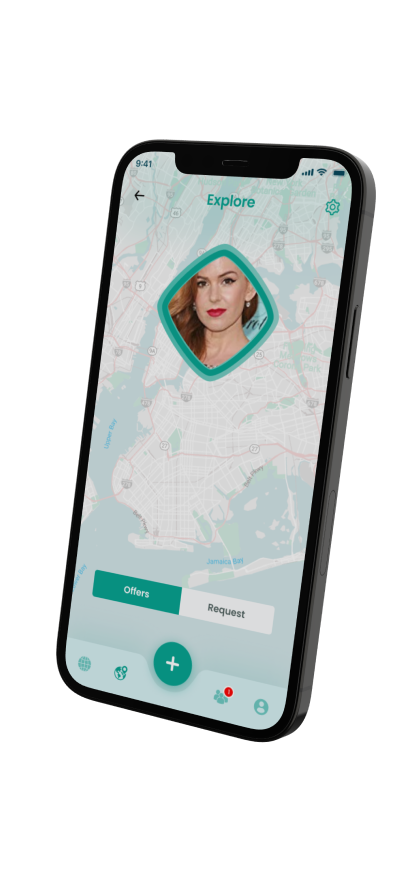
Project Overview
The misson
In Freshman year (2016), two of my best friends and I decided to create a platform to connect students to help other students get tasks done when they were doing them anyway. For instance, if I have a car and am going to pick up late night burgers at In ‘n Out or going to Ikea to pick up an item, why not help another student nearby who needs that task done and make some extra money? We thought that using public and private groups, students could post tasks they are doing to group chats (dorms, frats, classes) and the members of the posted groups can respond if they want the task to be done for them as well.
While apps to help with tasks existed, there was no existing platform to take advantage of the untapped supply of people who are already doing the task for themself. An app would make the process, including necessary details and the money transfer, clear and comfortable between the students.
The outcome
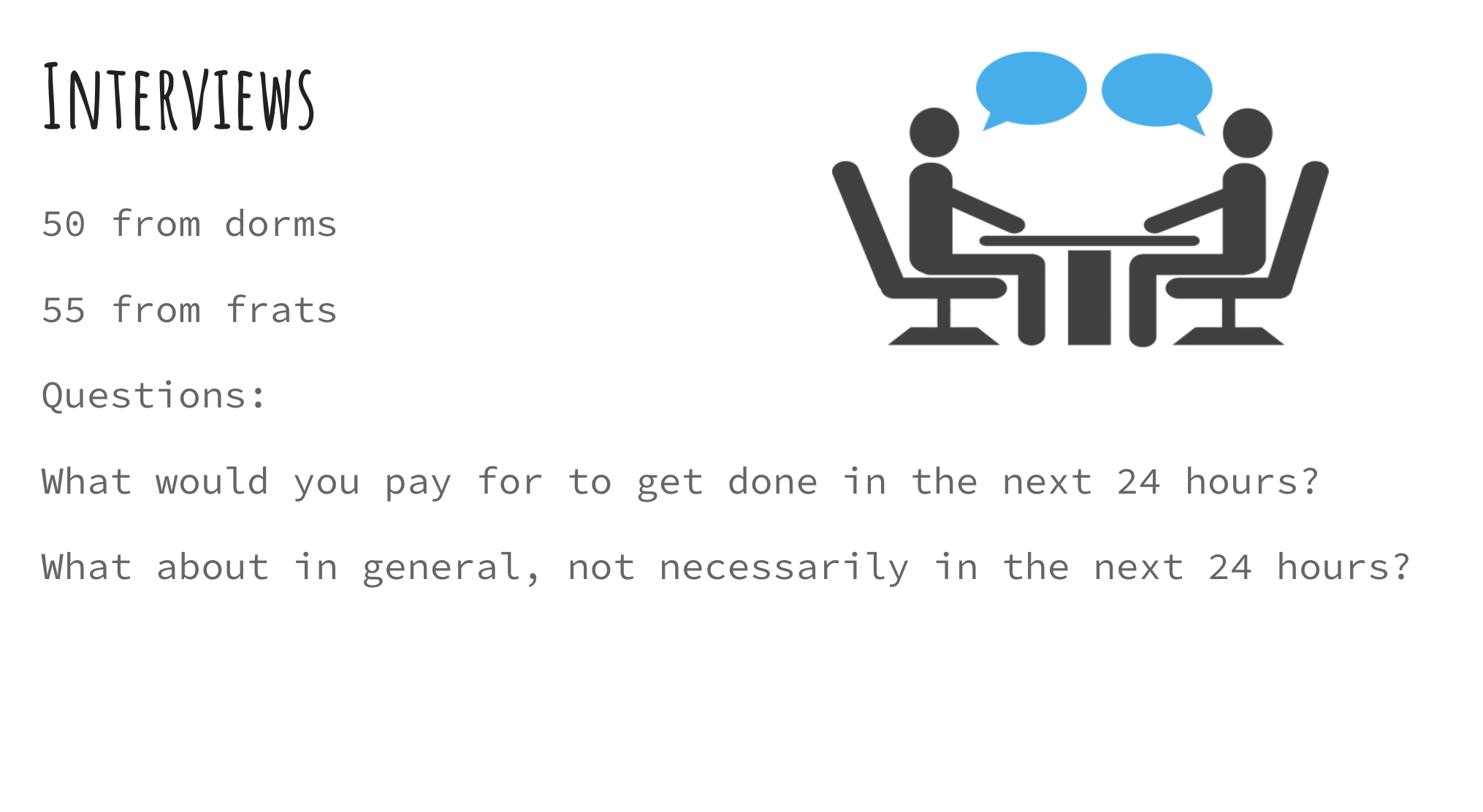
We user tested the basic idea with over 100 Stanford students, asking “What would you pay for to get done in the next 24 hours? What about in general, not necessarily in the next 24 hours?” Once we confirmed there was a need, we set up a google form and Facebook group and we stayed up late delivering late night food orders and running errands for our classmates. I did all of the UI and UX while my partners dealt with pitching, IOS development, and distribution. Though my Figma prototype was a bit rough as I didn’t have much experience, I really learned a lot!
We made over $1000 dollars, created a working website (now defunct), and secured an interview with YCombinator before we decided that we were too busy to be delivering other peoples’ hamburgers.
User Research and Testing
We found that...
We iterated by...
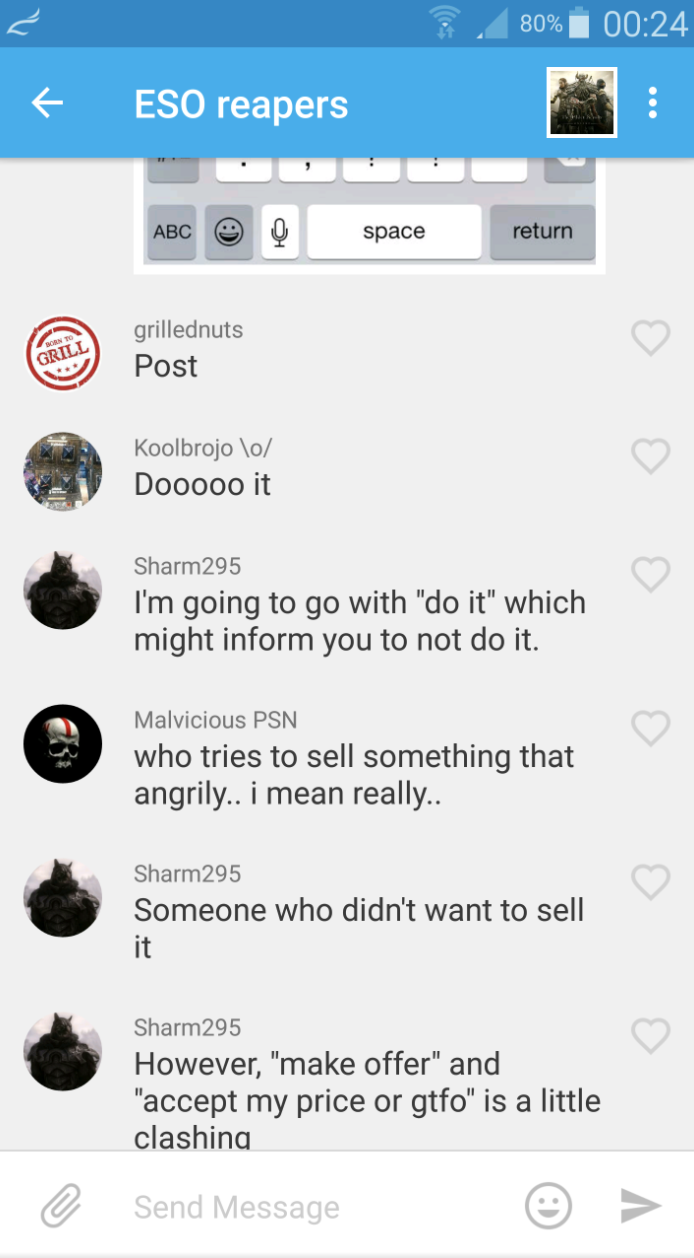
We got good feedback so we decided to test out the demand for the product by setting up a Facebook page with a form for people to send requests. We then transitioned to WhatsApp which turned to chaos...
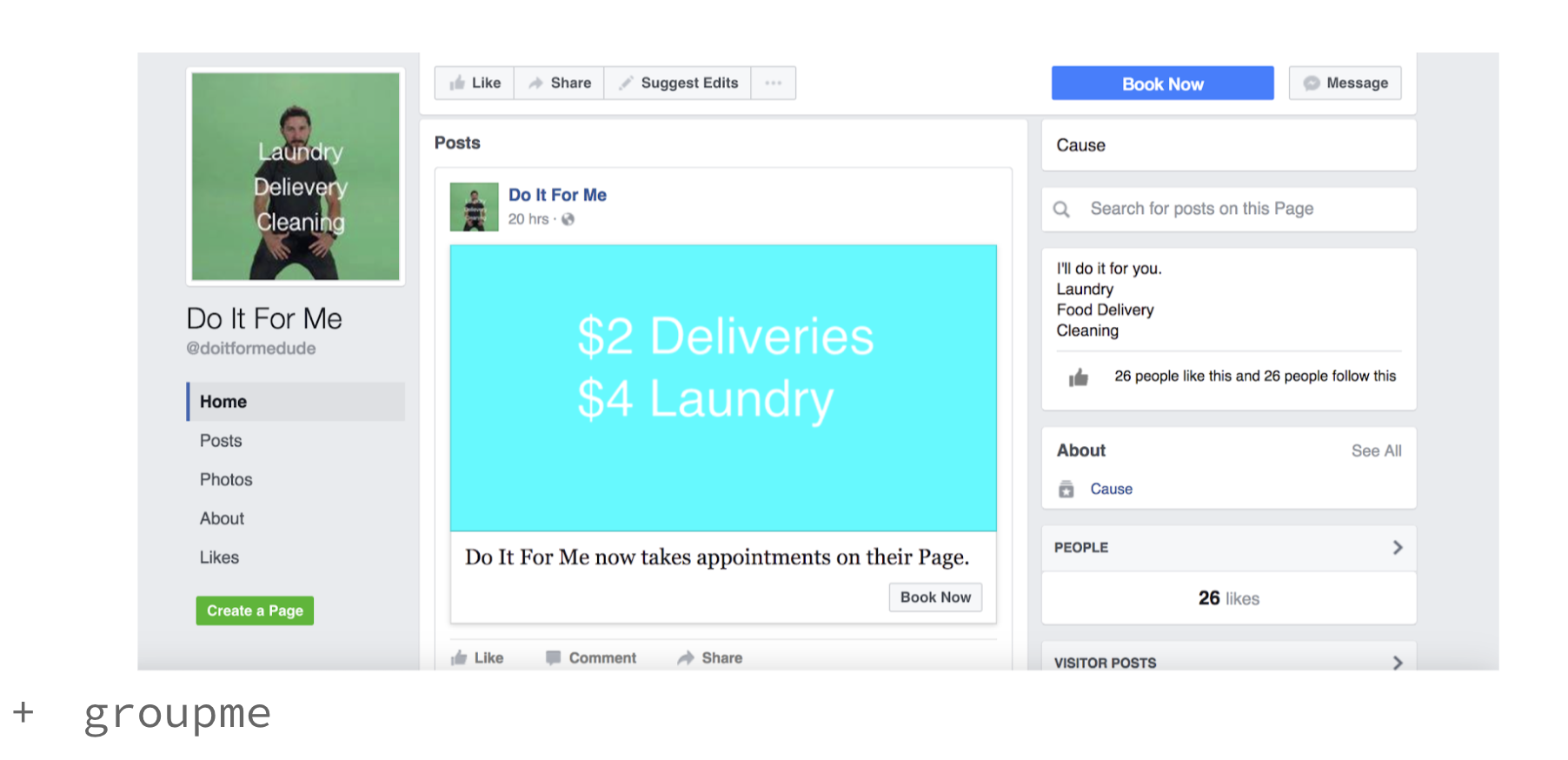
In all, between the 3 of us and some of our friends, we made completed over 200 food orders and 10 laundry orders. Many were group deliveries where we brought food for multiple people. We were testing demand for service, delivery prices, and task execution experience. We found that there was a high demand for cheap deliveries late night and that tasks were relatively easy to complete.
Wireframing
I created rough prototypes and began testing it with friends to see what they thought about the user flow. This was my first time using Sketch, so I relied on a lot of youtube tutorials to get a somewhat unattractive first draft out. Users hop on and can swipe through tasks and offers, as well as filter for specific requests.
After a few iterations and insight from my teammates, I developed a much higher quality set of wireframes using Figma. For example, I learned that a navigation bar on top was uncomfortable to use on a phone so I moved it to the bottom. I also learned that the font was difficult to read so I completely changed the styling.
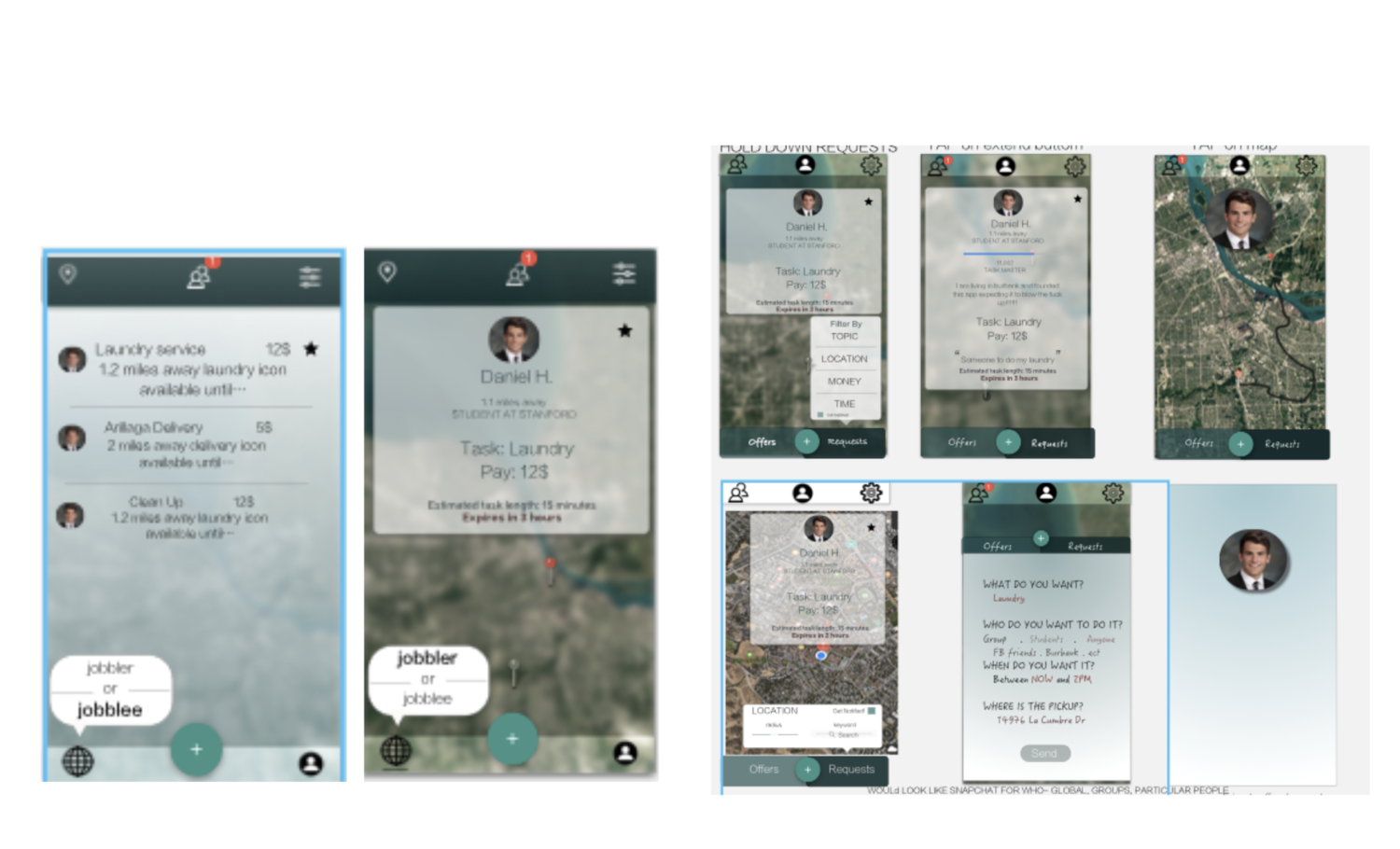
First set of wireframes
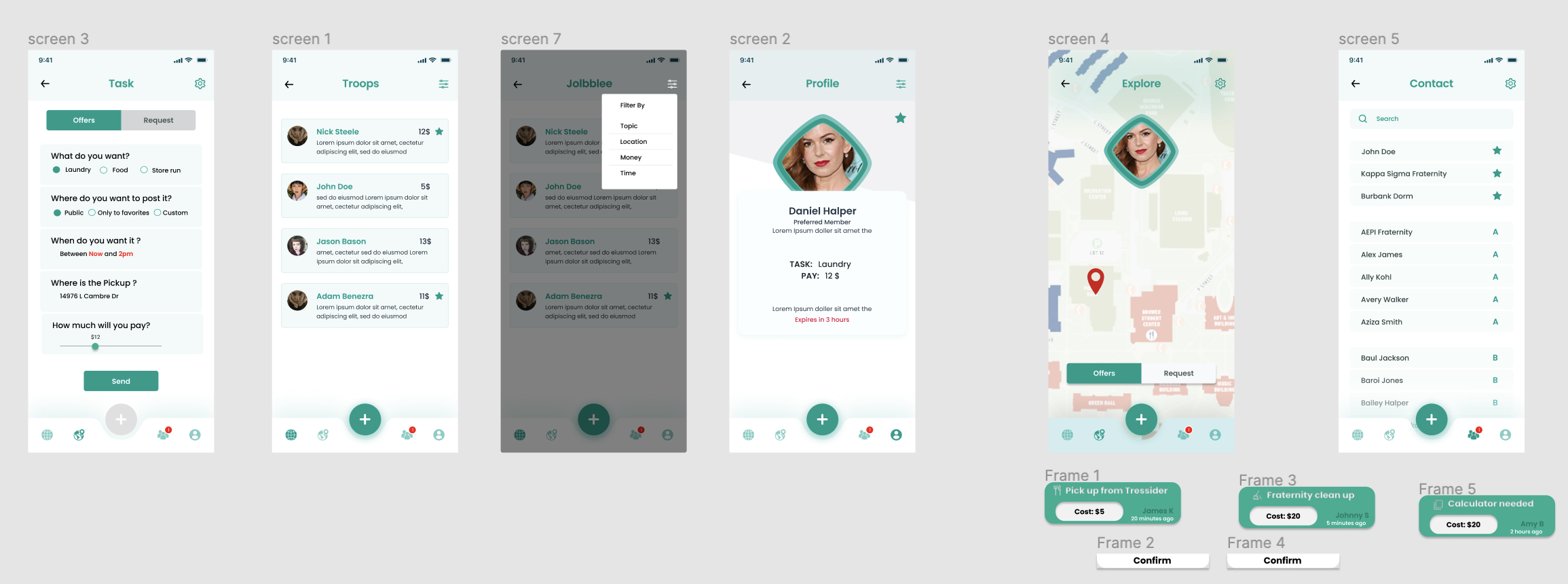
Redesign of wireframes
I pivoted away from a map home screen as we were focused on empowering the average student to easily make some money without having to go out of their way or stopping for anyone. This meant the deliveries should be within the community in which they lived (their dorm rooms, fraternities/sororities, and Co-Op houses). The map feature, on the other hand, prompts people to search for tasks to complete outside of their immediate community. The layout is much more conducive to an app for professional carriers who are looking to complete tasks for a living, but that is not what the use case we were interested in.
I came to the conclusion that the home page should be a messaging system as it allows for productive communication between the immediate community. For example, a student can message asking if anyone is planning on picking up food at TAP. Other people in the dorm interested can indicate they would like food there as well. Someone can volunteer to pick up and open up an order for people to add their orders to. It's similar to the way our Freshman dorm Groupme operated but without all the unpaid Venmo requests, confusion with the orders, and lack of incentive to post.
.gif)
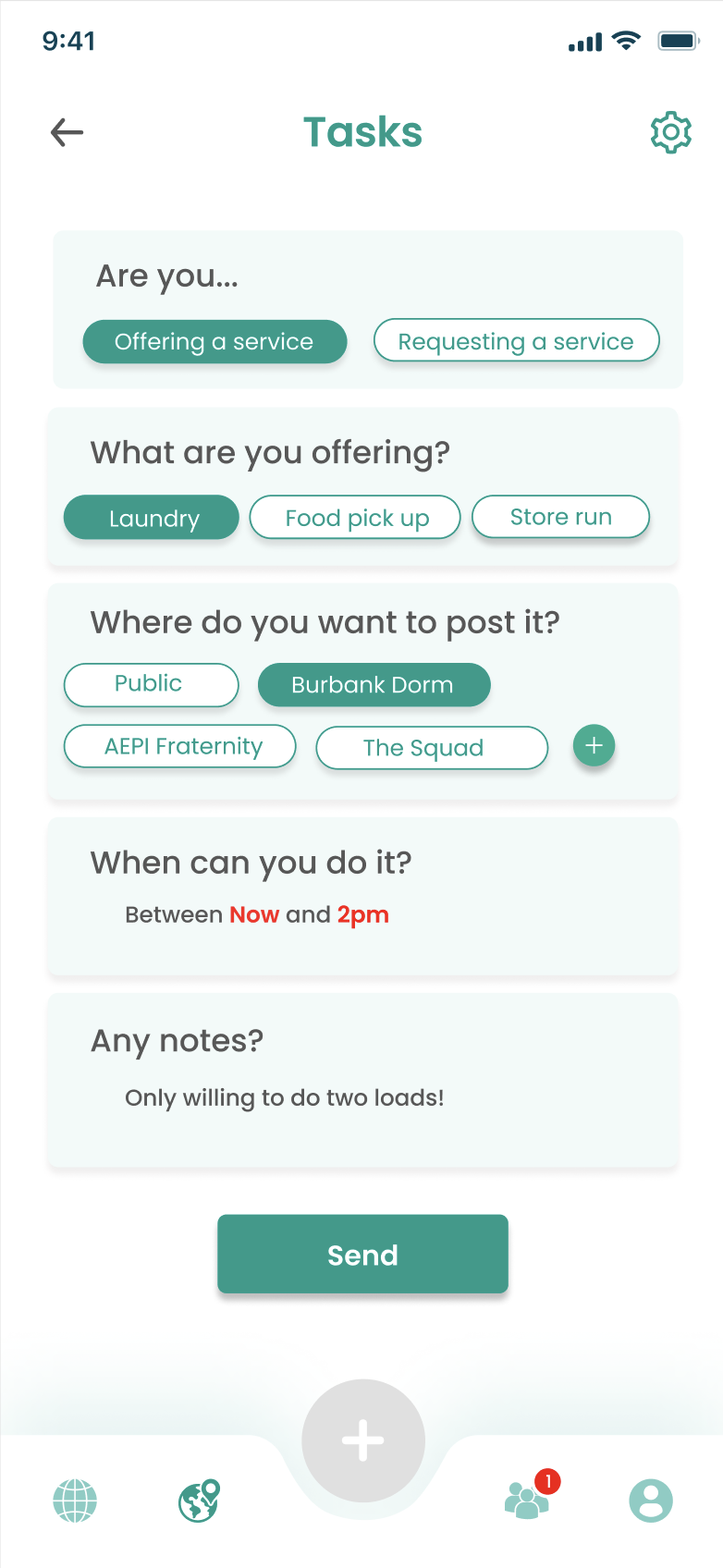
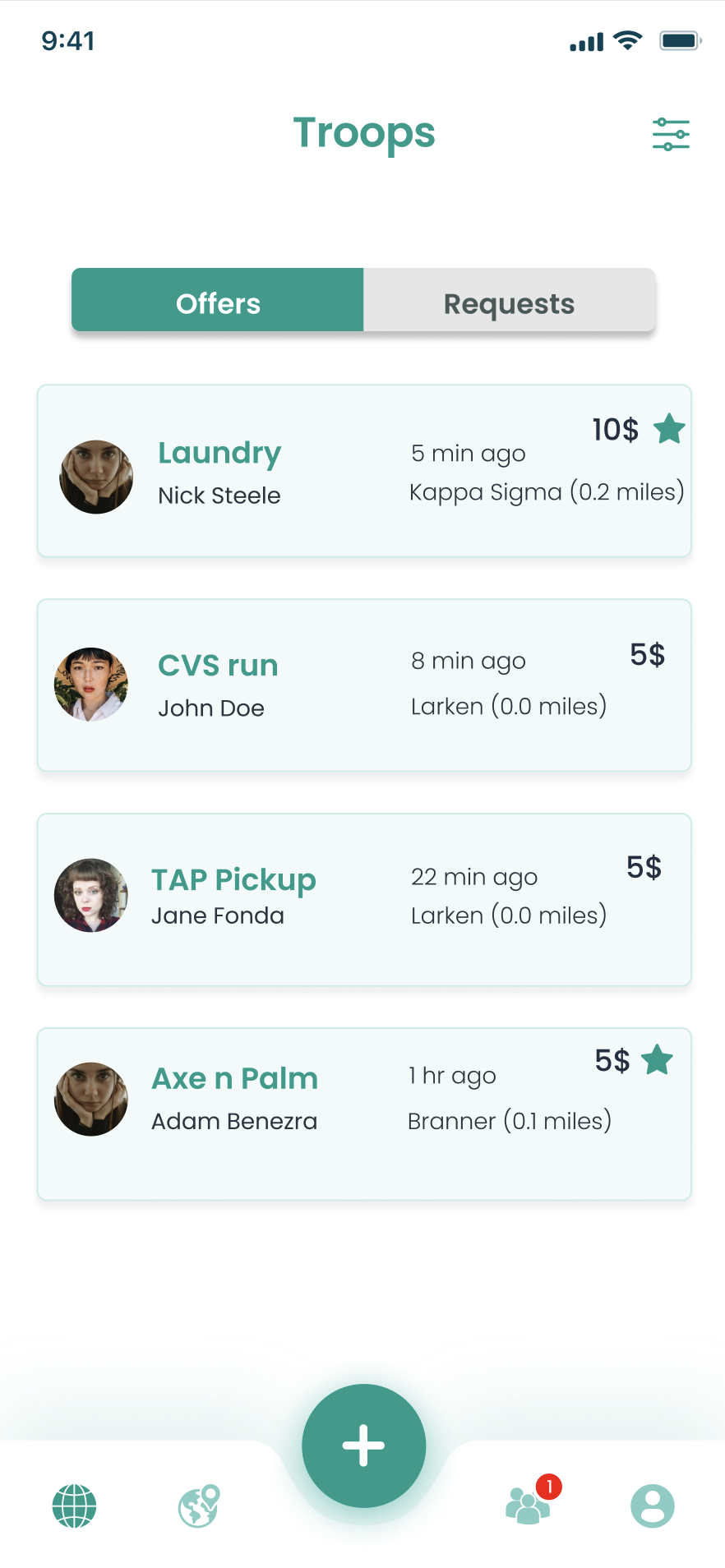
We secured an interview with YCombinator pitching our app and a few other investors. We created pitch decks, wrote out a marketing plan (which largely relied upon subsidizing early adopters on campuses and recruiting ambassadors), and began developing an app. Ultimately, I decided not to pursue it as the idea had a couple serious flaws. For example, we did not have the resources needed to update the constantly changing menus and prices for all the restaurants and stores we offered. While I believe we made some big mistakes, I learned a ton!
What did I learn?
1. How to create pitch decks
In preparation for our YCombinator interview, I learned how to properly market and pitch a product. I got much better at designing for Google Slides and learned how to do marketing analysis. Though we didn't get a spot in YCombinator, it was a great learning experience!
2. Sketch and Figma
This was my first project using Figma. I had experience fiddling on Sketch and designing for my High School newspaper using Adobe Illustrator and Photoshop, but I had never designed an app before. I took a course on Sketch and Figma between January and May of 2017 so I made huge improvements on my design throughout the iterative process. Leading the UX and UI for Troops was a huge growth experience for me.
3. How much I love Product Design
This project was the reason I decided to major in Product Design. I began to realize I had a good eye for product sensibility and loved the design process. I particularly loved the collaborative experience of staying up to 1AM every night in our Freshman year dorm basement designing how the app would work and the next steps.