
That Feeling When (card game)
A Social Emotional Learning Game for children to play in class
My Roles:
User Research & Testing • UX • Marketing
Type:
Senior Capstone Project
Project Overview
The misson
As mental health issues skyrocketed for children during the pandemic, the American Rescue Plan (ARP) Act of 2021 injected $123 billion into K-12 education programs, giving educators a greater opportunity to implement programs for social-emotional learning (SEL). In light of this development, three fellow Stanford Product Designers and I sought to design and distribute a social-emotional learning app or game for students in under-resourced LAUSD schools.
The outcome
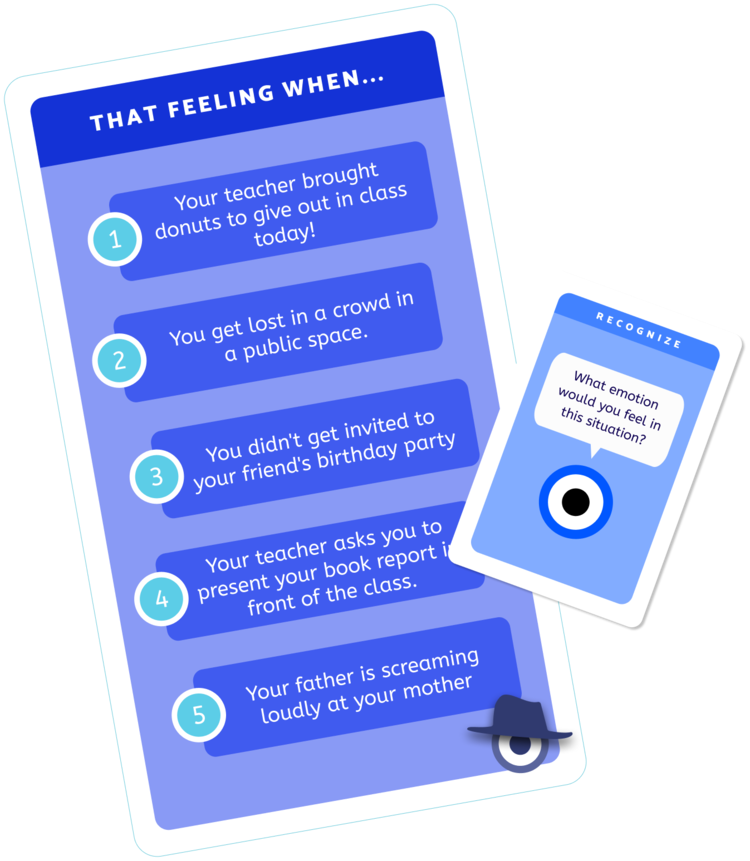
We designed and manufactured a fun card game that effectively improved students’ emotional vocabulary. Our pre and post-session assessments with 20 students demonstrated that students learned the definition of new emotional vocabulary words after 30 minutes of playing and 19 out of 20 said that they would want to play again. This project has since been made into an online game.
User Research
Research Profile
Interviews
Game Design

We took inspiration from the new craze "Among Us" and a Jackbox game called "Fakin' It" to build a fun game that utilizes an imposter model, where one or two players are given a different hand than the rest of the players and everyone else has to figure out who it is. In this case, students answer prompts based on a situation they are placed in, but one students is given a different situation. The game incentivizes students to articulate why they would feel a particular emotion in a given situation to back up their answers and not seem like they were given a different situation from the rest. We loved the idea and so did the child psychologists who were reviewing our progress.
Initial Deck Design
.png)
Finalized Deck Design and Game Mechanics
.png)
We tested the game out with over 40+ children using Step Up Tutoring and our personal connections over the course of 3 weeks and iterated until we had a smoothly running game. In our final test, 19 out of 20 students said they want to play another round and many of the students learned new emotional vocabulary like "Anxiety" and "Jealousy".
Distribution
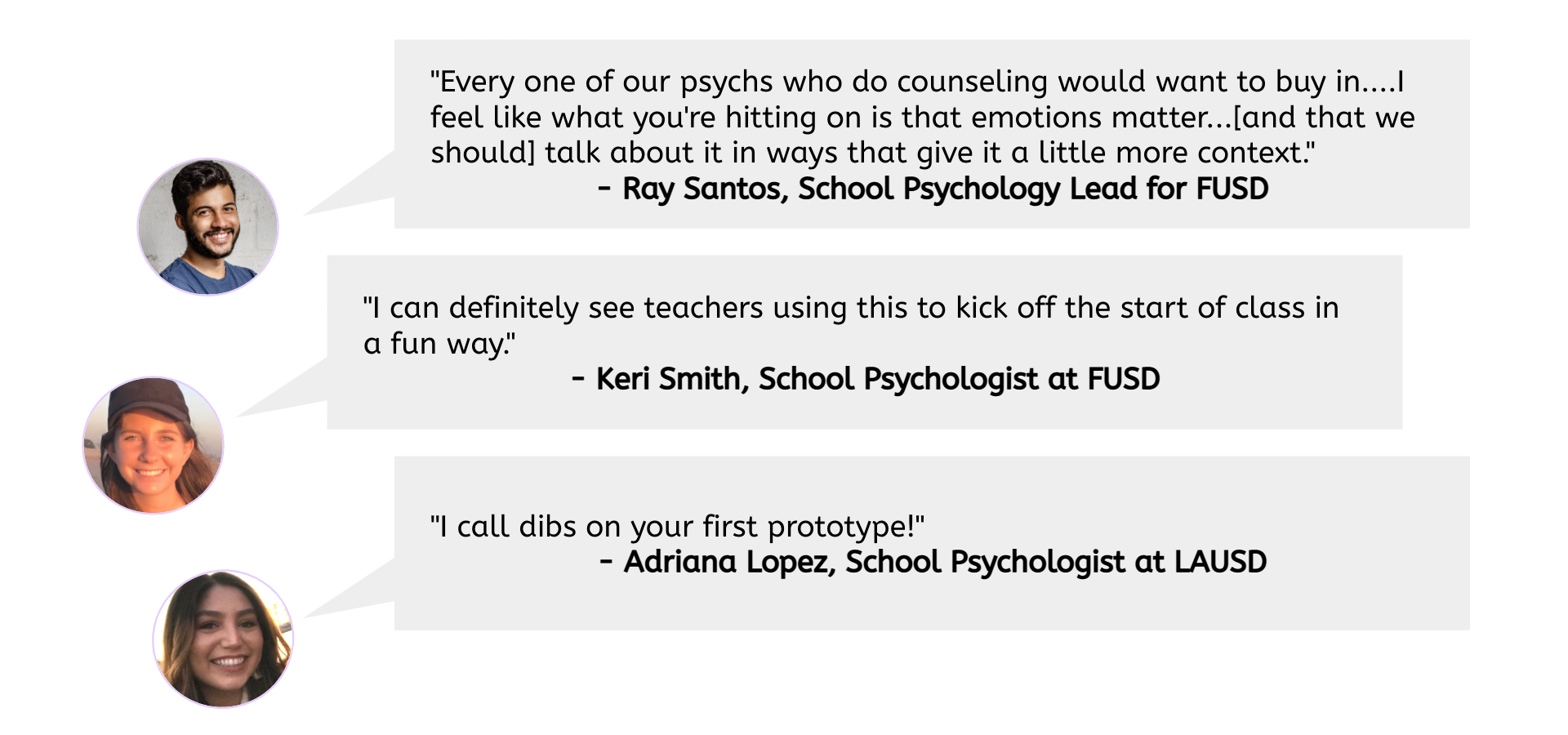
We spoke to 24 teachers and school psychologists who were interested in using the game in their classroom. We also had plans to expand to After School programs in the LA area.


What did I learn?
1. How to conduct effective user research and user testing
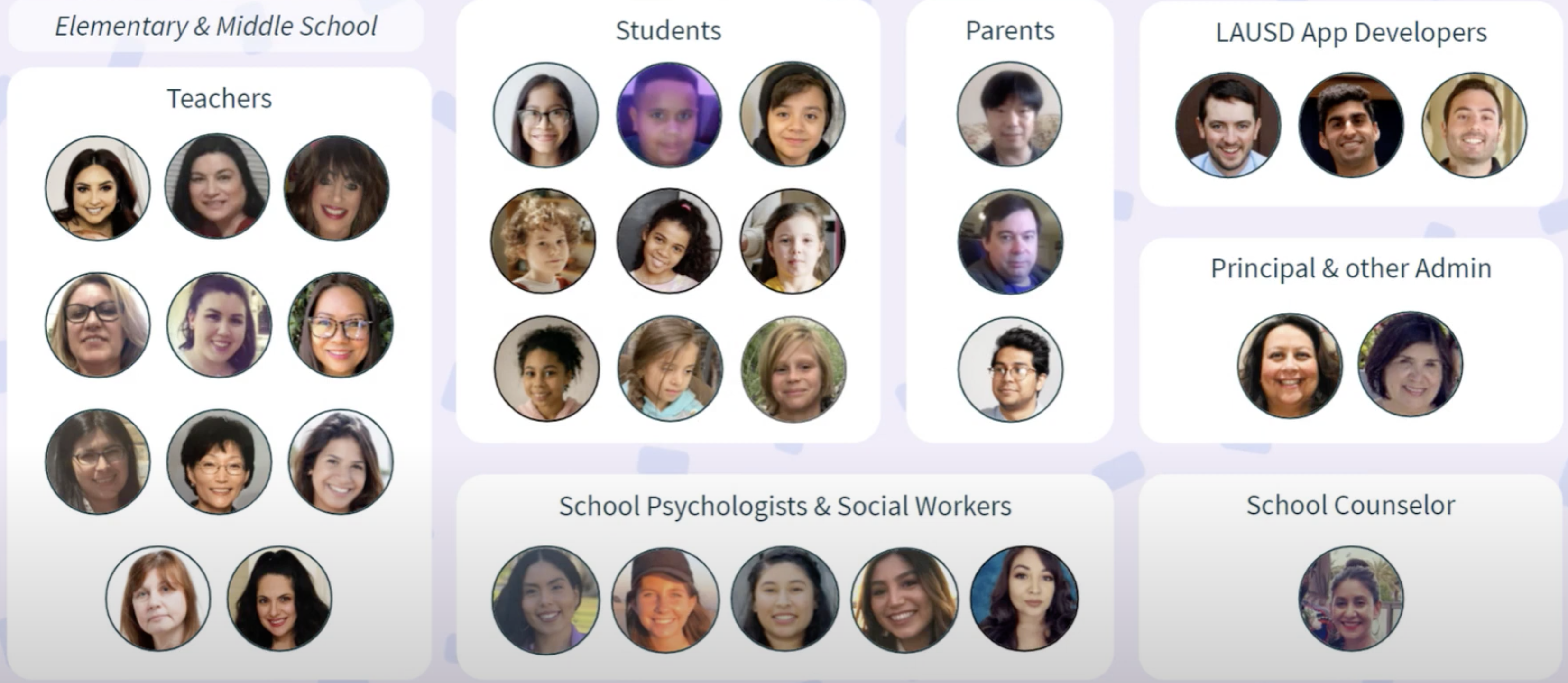
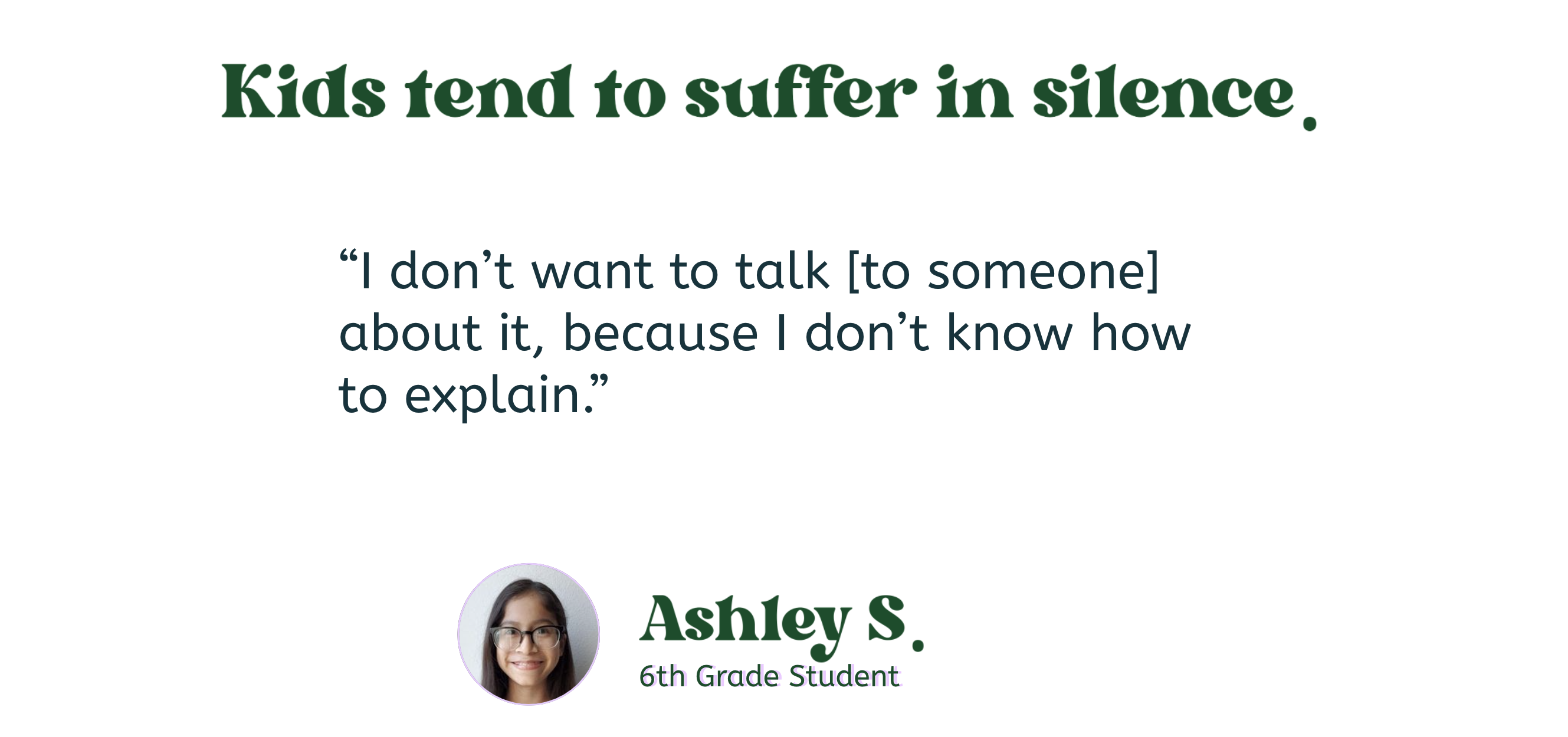
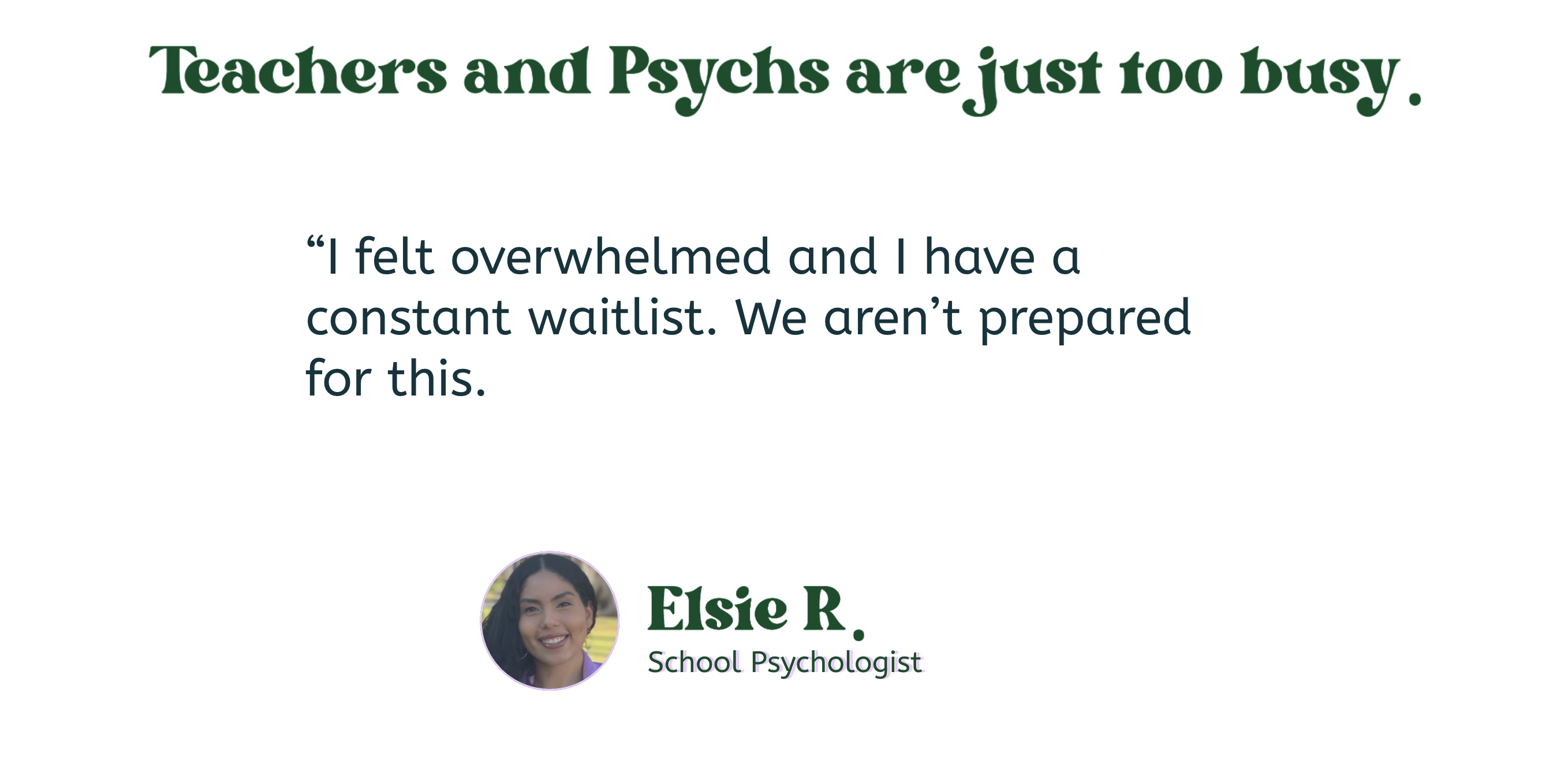
Through our 10-week “Needfinding “course, we learned how to interview relevant users, stakeholders, subject experts (I personally interviewed over 20 people for this project). We also learned how to utilize those findings to iterate, improve the product, and test our rapid prototypes on users.
2. How to collaborate closely with an amazing team
I had not worked so closely with 3 other designers on a project before so it was a really great learning experience to have so many people sharing their ideas for the project.
3. How to design with constraints
Once we had finished the weeks of user research and product ideation, we only had a 8 weeks to design the UI and develop the product. None of us had any app development experience at the time, we didn’t have a lot of money to spend, and we were short on time so we decided to pivot the product from an online game to a card game.